English
 Español
OEM Procurement — Beauty Appliances
Rotary Styling Combs Look Simple. Making Them Isn’t.
A practical field guide for brands, distributors, and salon buyers who need to compare rotary styling comb manufacturers, understand the engineering trade-offs, and place an order they won’t regret.
Two rotary styling combs can sit side by side on a showroom table and look almost identical. Pick both up, run them through a section of damp hair, and the differences appear within a minute: motor noise, bristle stability, heat consistency, the way the barrel reverses, even the balance in your hand. For an importer, a salon chain, or a marketplace seller, that first tactile comparison often matters more than the spec sheet. This guide explains what to look for when assessing rotary styling comb manufacturers, and how to turn those observations into a dependable OEM purchase.
The category has grown quickly because it solves a real problem: rotating bristles do the wrapping work that used to require two hands and years of training. Behind that convenience sits a stack of engineering decisions — micro motors, gear trains, heating elements, heat-resistant plastics, bristle geometry, and control boards. A factory that masters these details can deliver a product with a long retail life. One that does not will simply recycle the same rejection reasons through your quality reports.
What a Rotary Styling Comb Actually Contains
Strip away the branding, and a rotary styling comb is a compact assembly: a motor-driven rotating barrel, bristle segments arranged around it, some form of heat or air assist, and an outer shell that must resist heat and constant hand pressure. Manufacturers configure these parts in three common ways. The first is a motorised rotating comb with gentle heat, aimed at daily smoothing. The second adds a hot-air path through the barrel, so bristles lift the root while warm air shapes the strand. The third is a two-way reversing design that changes direction automatically, wrapping hair upward instead of twisting it around itself.
Reversible rotation is not a luxury feature. A comb that only spins one way forces the user to angle the wrist on every pass, which is why early rotating brushes earned a reputation for arm fatigue. A well-executed two-way mechanism, operated by thumb control, is closer to how a professional stylist wraps a section. It is also an easy quality check: listen for a clean change of direction, not a motor that hesitates and clicks.
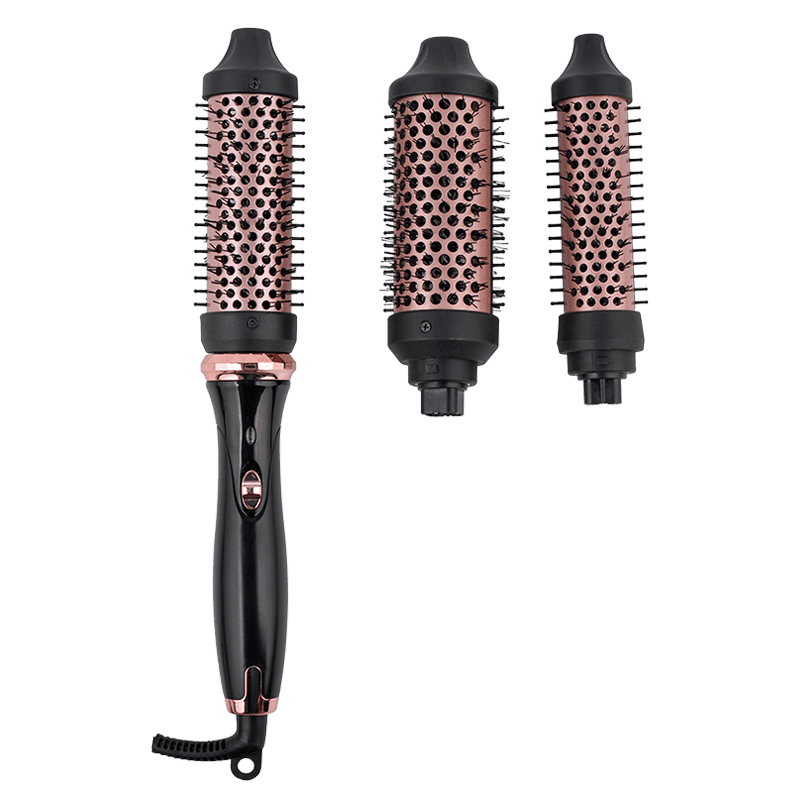
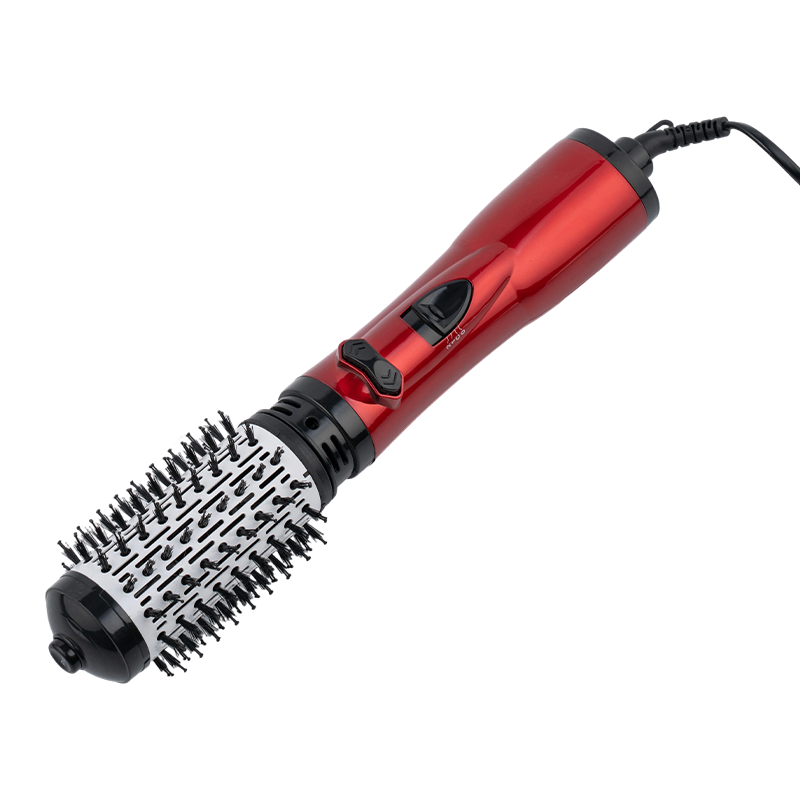 Two-Way Rotary Comb with Ceramic Enamel HeadThis rotary comb features bidirectional rotation and interchangeable tips, directly addressing wrist fatigue and motor quality concerns highlighted in the discussion.View Product →
What Separates Capable Manufacturers From the Rest
The real differences between manufacturing tiers show up in four internal decisions. First is the motor. Brushed DC motors are inexpensive and noisy, and their brushes wear out after hundreds of hours. Brushless motors cost more on the bill of materials but run quieter, hold speed better under load, and support a longer product lifetime. Factories that promote brushless technology across their styling lines, rather than only in flagship models, are usually investing in repeat reliability.
Second is temperature control. Basic PTC heaters drift; a unit with an NTC sensor and digital feedback keeps the heated surface closer to the set temperature. That matters more in a rotary comb than in a flat iron, because the barrel works within a centimetre of the scalp. Third is material quality: nylon bristles need rounded tips and even spacing, and ceramic-coated metal barrels should be checked for chipping after repeated heat cycles. Fourth is the shell and gear housing. The gap between the rotating collar and the fixed handle, and whether the gear train stays quiet after a hot run, tell you how much attention the assembly received.
“Cold operation always feels fine. The real faults appear once plastic expands and tolerances shift under heat.”
Factory tooling shorthand
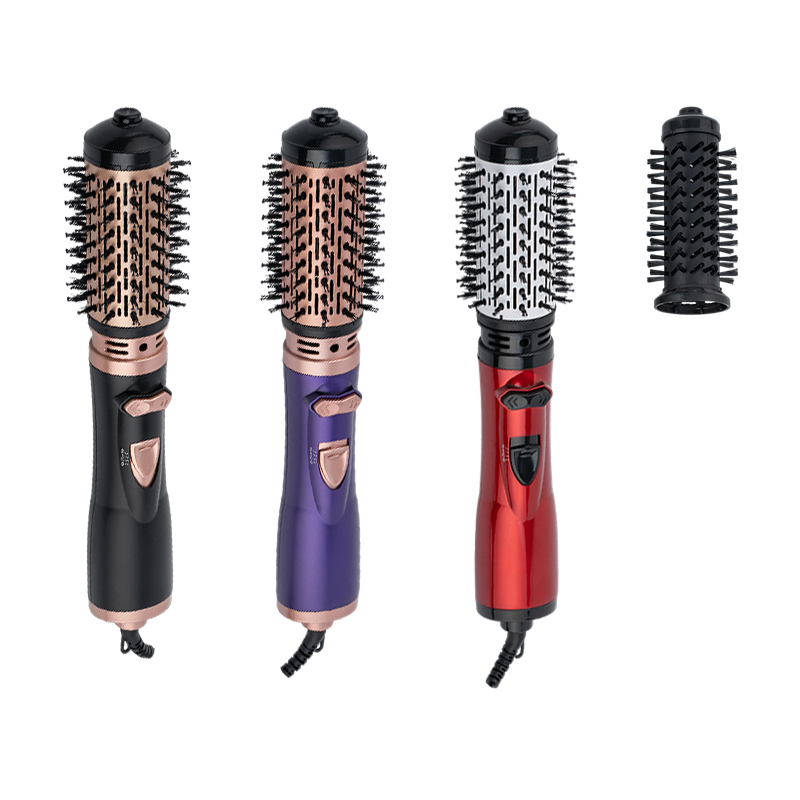
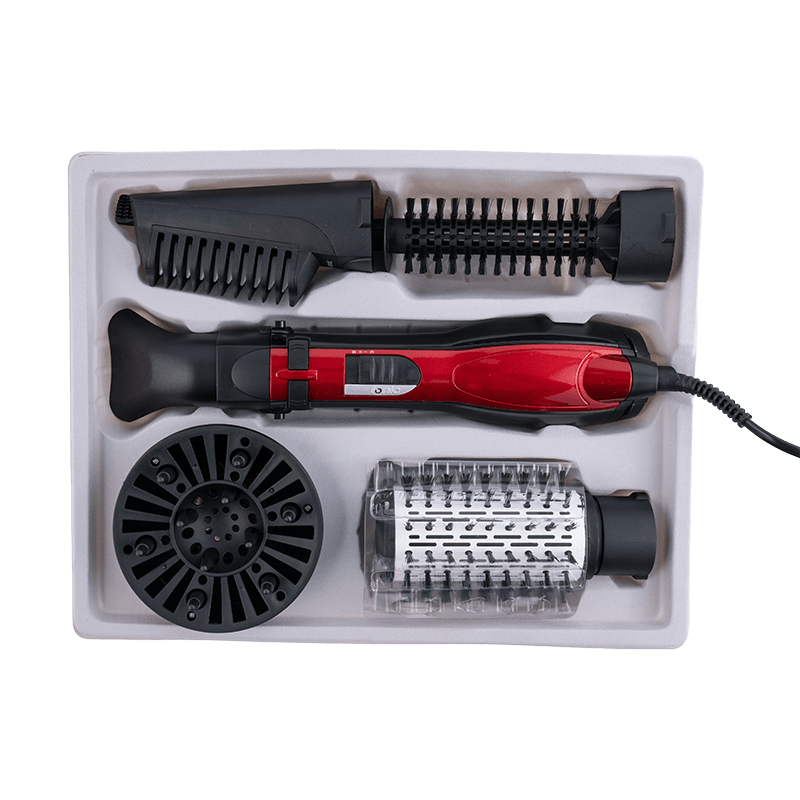 3-in-1 Hot Air Spin Brush Styler for Versatile StylingCombining dryer, curler, and volumizer with rotating heads, this tool suits heat-expansion concerns and factory catalog flexibility mentioned in the surrounding text.View Product →
Product Range Depth: Why Variety Matters in Negotiation
Rotary styling comb manufacturers who serve international buyers usually build their catalogues around usage scenarios rather than isolated SKUs. Understanding that structure helps in negotiations. A factory that already produces a large-diameter home model and a compact travel version is likely sharing core components between them, which can improve pricing and shorten custom development.
- Two-way rotary combs for daily smoothing and defined curls.
- Hot-air spin brushes for volume and bounce in one pass.
- High-power ceramic-coated versions for dense, coarse hair.
- Mini dual-roller units for bangs, short layers, and travel kits.
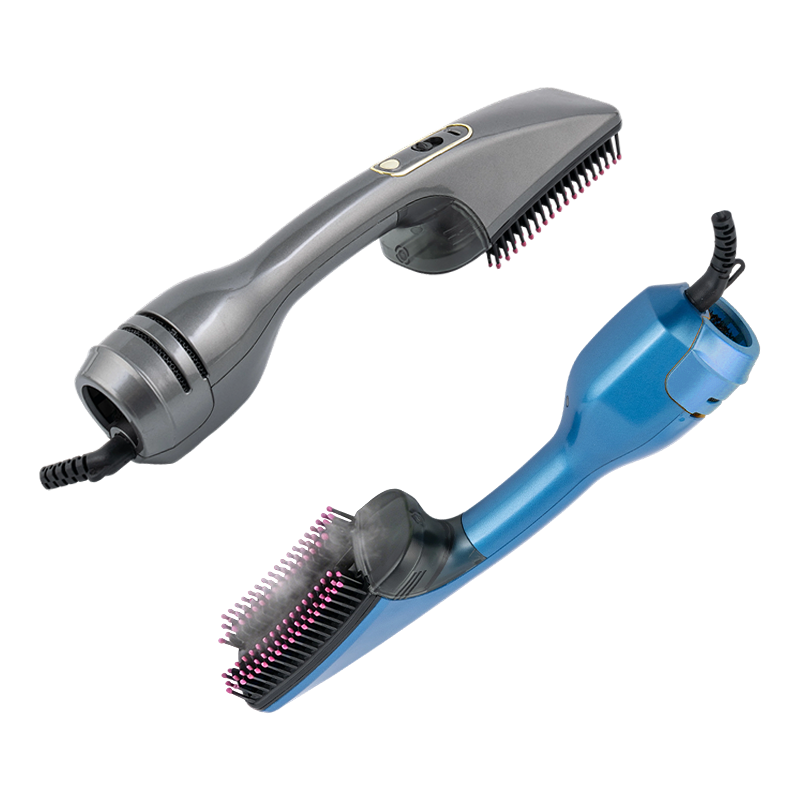
- Ion- or steam-assisted variants that reduce flyaways while rotating.
The range also reveals development depth. A manufacturer that builds its own molds, and can change exterior colours, print custom patterns, or adapt a handle shape without redesigning the internal platform, is a different partner from one that assembles standard parts. That flexibility matters if your channel depends on seasonal drops, exclusive shades, or distinctive packaging.
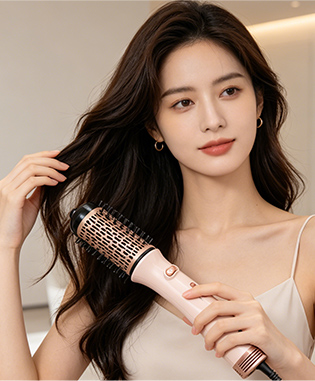
 All-in-One Rotating Comb with Multiple Brush HeadsOffering wide voltage, three detachable brush sizes, and two heat settings, this comb reflects development depth and adaptability useful for evaluating factory quotes.View Product →
Scoring Manufacturers: A Practical Comparison
When the quotes arrive, a simple scoring table separates marketing language from engineering reality. Weight each row according to your price point: a fast-moving marketplace product can tolerate some motor noise, while a salon-exclusive line cannot. Neither should compromise on basic thermal safety.
| Evaluation Area | Entry-Level | Preferred | Why It Matters |
|---|---|---|---|
| Motor | Brushed DC | Brushless | Noise, speed stability, and warranty cost over the product’s life. |
| Temperature control | PTC heater drift | NTC sensor with digital feedback | The barrel sits close to the scalp; stable heat prevents complaints. |
| Barrel and bristles | Basic nylon pins | Ceramic-coated barrel with rounded tipped bristles | Gloss results and scalp comfort during daily use. |
| Shell and gear housing | Standard ABS | Heat-resistant polymer, reinforced collar | Long-term smoothness of rotation and structural durability. |
| Mold and finish | Single mould colour | Multi-tone injection or custom pattern | Retail differentiation and exclusive line opportunities. |
Procurement Risks That Only Surface Later
Some problems are hard to see in an initial sample yet consistent in the first container. Motor whine becomes obvious when a salon runs ten units at once. Barrel wobble, acceptable when hand-testing one sample, becomes a statistical issue across a thousand units. Wrong bristle stiffness creates drag on chemically treated hair. And packaging that was not designed for the rotating collar lets the comb rattle in transit, so the customer hears a loose part before touching the product.
- Reversal failures after repeated thermal cycles.
- Bristle shedding from collars assembled with inconsistent tension.
- Grease migration from the gear train onto the barrel in warm climates.
- Certification documents that do not match the target market.
How to Write an OEM Brief That Produces Better Quotes
A vague request such as “send me your rotary comb catalogue” generates vague pricing. Buyers who receive genuinely useful quotes usually include six pieces of information: target retail price, intended use case, preferred barrel length and rotation behaviour, required heat range, custom branding needs, and projected monthly volume.
- Define the hair types and styling outcomes you are selling.
- Specify barrel length, bristle material, and rotation behaviour.
- Set a realistic target shelf price so the factory can select components.
- Share the certification requirements of your target countries.
- Ask for a heat-on sample and a development timeline.
- Discuss MOQ in terms of shared components and line utilisation.
The Bottom Line
Rotary styling combs are one of the easiest styling products for consumers to love, and one of the harder categories for a factory to get quietly right. Motor choice, thermal control, bristle contact, and the reversing mechanism decide whether a customer keeps recommending the product or returns it in week three.
For buyers working with Chinese original manufacturers — producers with in-house mold development and OEM/ODM programmes — our advice is to keep the checklist short. Inspect the motor and sensor choices. Test the reversing function with the heat applied. Verify certification coverage. And confirm that the supplier can flex on colour and packaging without rebuilding the tool. When you plan the range, our comparison of heated curling rods versus no-heat rotating combs is a helpful starting point, and the notes we have published on judging whether a hair straightener is genuinely safe apply to rotary combs just as well.